
Best payment gateway for small business: Top choices and quick comparisons
Choosing a payment gateway is one of the most critical decisions an online business can make. The right system is more than just a tool for processing transactions; it streamlines your operations, builds crucial customer trust, and scales as you grow. Conversely, a poor choice can lead to unnecessarily high fees, frustrated customers abandoning their carts, and ultimately, lost sales. This guide is designed to cut through the complexity and help you find the best payment gateway for your small business.
We will directly compare the top contenders, focusing on the features that matter most to entrepreneurs and developers. You will get a detailed breakdown of:
- Transaction Fees: Clear, transparent cost structures.
- Platform Integrations: How easily each gateway connects with tools like WooCommerce and Magento.
- Payout Speed: How quickly your money arrives in your bank account.
- Security & Compliance: Essential measures to protect you and your customers.
This roundup explores established processors like Stripe and Square alongside innovative crypto payment solutions like BlockBee. Each review includes actionable insights, direct links, and screenshots to provide a clear, practical comparison. Our goal is to equip you with the information needed to select a payment partner that helps your business thrive by getting you paid quickly, affordably, and securely.
1. BlockBee
BlockBee stands out as a premier crypto payment gateway for small businesses, particularly those prioritizing security, control, and developer flexibility. Unlike custodial platforms that hold your funds, BlockBee operates on a non-custodial model, ensuring that all incoming cryptocurrency payments are sent directly to your wallet. This architecture eliminates third-party risk and gives you immediate, sovereign control over your revenue, a critical advantage for businesses managing digital assets.
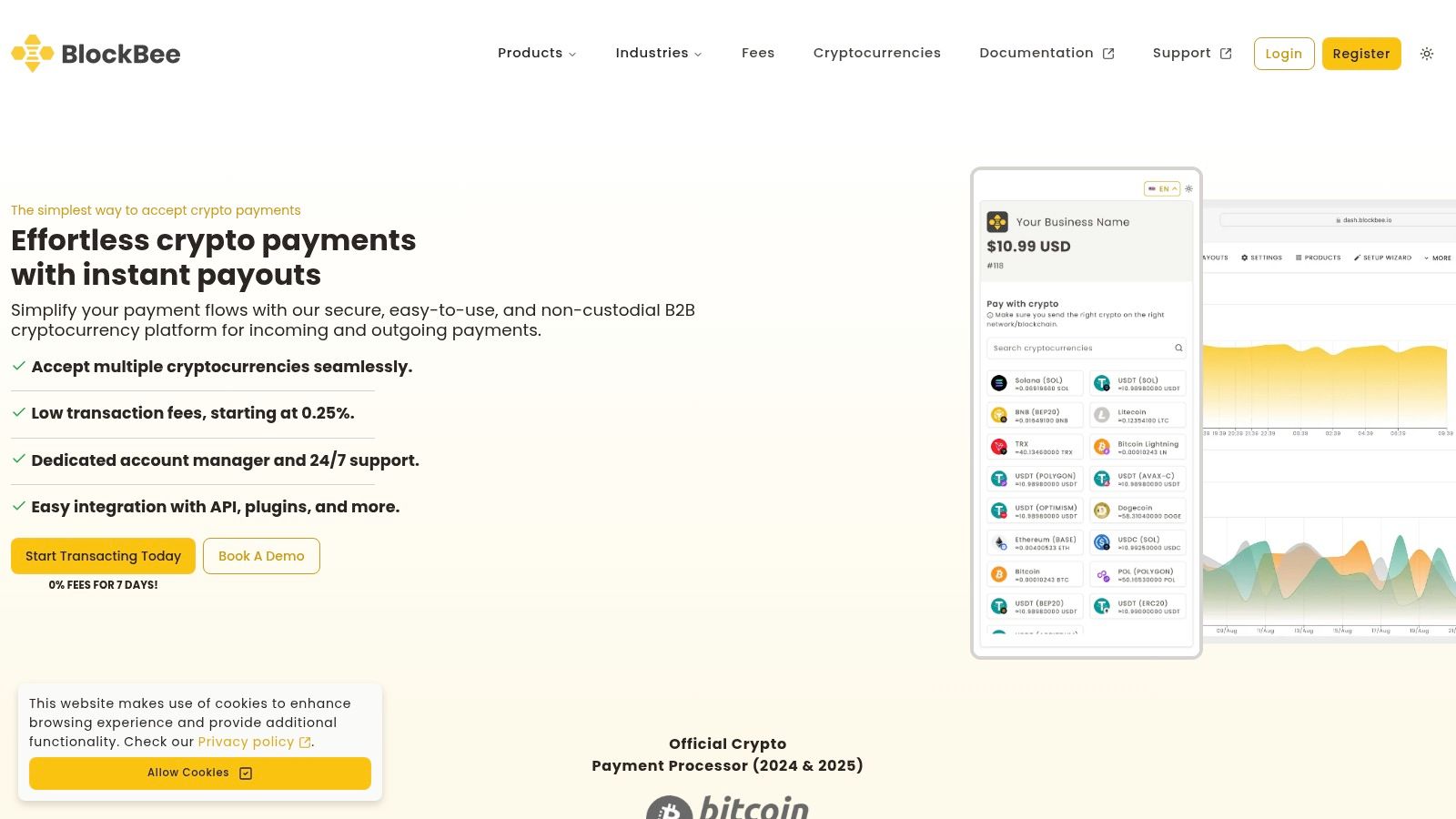
This platform is engineered for seamless integration and scalability, making it a strong contender for the best payment gateway for small business owners venturing into crypto. With support for over 70 cryptocurrencies, it allows merchants to cater to a global customer base without friction.
Why BlockBee Shines: Key Features & Use Cases
BlockBee's feature set is built to address the practical needs of modern e-commerce and digital businesses. Its developer-first approach ensures that integration is straightforward, whether you're using a popular e-commerce platform or building a custom solution.
- Effortless Integration: Ready-made plugins for WooCommerce, Magento, PrestaShop, and others mean you can start accepting crypto in minutes. For custom builds, the flexible API allows for fully tailored payment flows without redirecting customers, maintaining a cohesive brand experience.
- Non-Custodial Security: Your funds are your funds. Payments are processed and forwarded instantly to your private wallet, giving you complete custody and mitigating the risks associated with centralized platforms.
- Mass Payouts Module: For businesses that need to disburse funds at scale (e.g., affiliate programs, contractor payments), the self-custodial Mass Payouts feature automates the process while keeping assets secure in your own wallets.
- Low and Transparent Fees: Pricing is highly competitive, with transaction fees starting at just 0.25% and no hidden setup or monthly costs. This simple structure is ideal for small businesses managing tight margins.
Practical Implementation
Setting up BlockBee is designed to be quick. After creating an account, you generate API keys and install the relevant plugin for your e-commerce store. For a platform like WooCommerce, you simply input the API key, add your cryptocurrency wallet addresses for payouts, and configure the settings. The gateway appears as a payment option at checkout, with BlockBee handling transaction detection and confirmation automatically.
Expert Tip: Leverage BlockBee’s reusable addresses feature. This allows you to assign a unique, permanent deposit address to each customer, simplifying recurring payments and improving transaction tracking for subscription-based services.
Pros and Cons
| Strengths | Weaknesses |
|---|---|
| Full Fund Control: Non-custodial model means you always retain ownership of your assets. | Mixed Support Reviews: While many praise the support, some users report slower handling of complex fraud cases. |
| Developer-Friendly: Robust API and official plugins make for easy and customizable integrations. | Fiat Conversion Clarity: On-site information about direct crypto-to-fiat settlement options could be clearer. |
| Broad Crypto Support: Accepts payments in over 70 different cryptocurrencies. | Account Scrutiny: Some reports mention account disputes or closures, so merchants should review compliance policies. |
| Cost-Effective: Low transaction fees starting at 0.25% with no fixed costs. |
Ultimately, BlockBee is an exceptional choice for tech-savvy small businesses, e-commerce stores, and fintechs seeking a secure, low-fee, and highly integrable crypto payment solution that puts them in the driver's seat.
Website: https://blockbee.io
2. Stripe
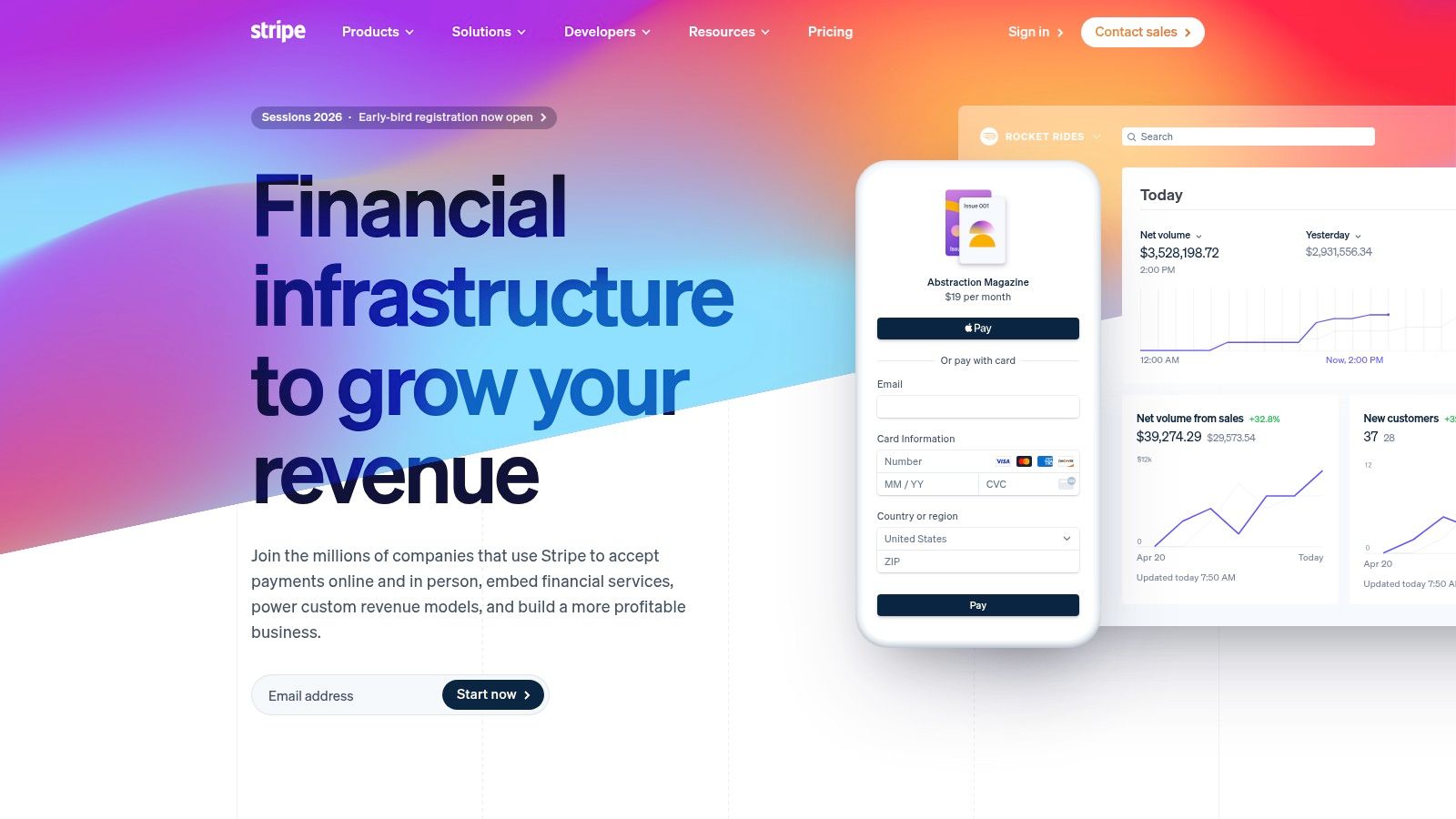
Stripe is a powerhouse in the payments industry, renowned for its developer-first approach and a comprehensive suite of tools that cater to both online and in-person transactions. It stands out as an end-to-end platform, ideal for businesses aiming to build custom payment experiences, manage subscriptions, or unify their sales channels under a single, scalable system. This makes it a top contender for the title of best payment gateway for small business, especially for those with growth ambitions.
Its robust API and extensive documentation are legendary, empowering developers to integrate payments seamlessly. However, Stripe also offers no-code solutions like Payment Links and a pre-built, hosted Checkout page, making it accessible even for non-technical users.
Key Features and Pricing
Stripe’s offerings are designed for flexibility, allowing businesses to pick and choose the tools they need. The standard, integrated pricing model is particularly appealing for startups.
- Pricing: The standard plan has no setup or monthly fees. Online card transactions are typically charged at 2.9% + 30¢ per successful transaction. In-person payments via Stripe Terminal are 2.7% + 5¢. For a deeper dive into how these fees stack up, you can explore this detailed payment gateway fees comparison.
- Payment Methods: It supports over 100 payment methods, including all major credit cards, digital wallets like Apple Pay and Google Pay, and bank debits (ACH), which are capped at a lower fee.
- Payout Speed: Standard payouts take 2 business days, but eligible businesses can access their funds within minutes through Instant Payouts for a small fee.
- Integrations: Stripe offers official plugins for all major e-commerce platforms, including WooCommerce, Shopify, Magento, and BigCommerce, ensuring a smooth setup process.
Pros and Cons
| Pros | Cons |
|---|---|
| No setup or monthly fees on standard plans | Can be complex for non-technical users without using hosted tools |
| Excellent developer tools, API, and documentation | Add-on fees for currency conversion can increase costs |
| Highly scalable from startup to enterprise | Account stability can be a concern for high-risk industries |
| Broad support for international payment methods | Payouts can be held for review, causing delays |
Best for: Online businesses, SaaS and subscription models, and companies with development resources that need a powerful, customizable payment infrastructure.
Website: https://stripe.com
3. Square
Square is a comprehensive commerce platform that excels at unifying online and in-person sales, making it an incredibly strong contender for the best payment gateway for small business. Originally known for its iconic white card reader that turned any smartphone into a point-of-sale (POS) system, Square has evolved into an all-in-one ecosystem. It offers everything from e-commerce storefronts and invoicing to robust hardware and team management, all under one roof.
This integrated approach simplifies operations for businesses that operate both physically and digitally. The platform is designed for rapid deployment, allowing merchants to start accepting payments almost immediately with transparent, flat-rate pricing and no long-term contracts for its standard plan.

Key Features and Pricing
Square’s strength lies in its predictable pricing and the built-in tools included with its free plan. It offers tiered plans (Plus, Premium) for businesses needing more advanced features.
- Pricing: The standard plan is free of monthly fees. Online card transactions are 2.9% + 30¢, while in-person payments (including Tap to Pay) are 2.6% + 10¢. Manually keyed-in transactions are 3.5% + 15¢.
- Payment Methods: Accepts all major credit and debit cards, Apple Pay, Google Pay, and Cash App Pay. It also supports ACH bank transfers with a low fee of 1% (min $1), processed via invoices or its API.
- Payout Speed: Standard transfers arrive the next business day. Instant transfers are available 24/7 for a 1.75% fee, allowing access to funds within minutes.
- Integrations: Square integrates seamlessly with major e-commerce platforms like WooCommerce, BigCommerce, and Wix. Its own ecosystem includes tools for appointments, restaurants, and retail, reducing the need for third-party software.
Pros and Cons
| Pros | Cons |
|---|---|
| Extremely fast and easy setup for both online and POS sales | Online transaction rates can be higher than competitors at scale |
| Excellent ecosystem of POS hardware and software | Advanced features often require a paid Plus or Premium subscription |
| Flat-rate, predictable pricing with no monthly fees | Can be less flexible for businesses with unique, complex needs |
| Next-business-day transfers are standard, with instant option | Account stability can be an issue for businesses in high-risk sectors |
Best for: Retail businesses, service providers (salons, contractors), restaurants, and any small business that needs a unified solution for in-person and online payments.
Website: https://squareup.com
4. PayPal for Business
PayPal is one of the most recognized and trusted names in digital payments, offering a platform that combines ubiquitous wallet acceptance with traditional card processing. Its strength lies in its massive user base and the consumer confidence its brand inspires, which can significantly lift conversions for small shops and service-based businesses. By leveraging the familiarity of both PayPal and Venmo, it provides a frictionless checkout experience, particularly for mobile and social media shoppers.
This makes it an excellent choice for businesses looking for a payment solution that customers already know and use. Instead of building a complex payment stack from scratch, merchants can integrate PayPal’s well-known checkout button, instantly offering trusted payment methods like PayPal, Venmo, and Pay Later options alongside standard card payments.
Key Features and Pricing
PayPal for Business offers a straightforward approach to getting started, with no setup fees on its standard plans. Its pricing structure varies based on the transaction type.
- Pricing: Standard online credit and debit card transactions are priced at 2.99% + 49¢. PayPal Digital Payments (including PayPal Checkout, Venmo, and Pay Later) are 3.49% + 49¢. In-person payments via QR code are lower at 2.29% + 9¢.
- Payment Methods: Accepts all major credit and debit cards, PayPal, Venmo, and "Pay in 4" buy now, pay later financing. It also supports in-person payments through Tap to Pay and POS hardware.
- Payout Speed: Standard transfers to your bank account typically take 1-3 business days. Instant Transfers are available for a fee, moving funds to a linked bank account or debit card within minutes.
- Integrations: PayPal offers simple integrations for most major e-commerce platforms. For merchants on Shopify, understanding how PayPal fits into their ecosystem is crucial; you can explore this topic further in our guide to the best payment gateways for Shopify.
Pros and Cons
| Pros | Cons |
|---|---|
| High consumer trust and brand recognition can boost conversions | Fees can be higher than interchange-plus providers |
| No setup or monthly fees for standard accounts | Dispute and chargeback processes can be rigid for small sellers |
| Easy "drop-in" integration for many e-commerce platforms | Account holds and fund freezes can occur with little warning |
| Venmo and Pay Later options appeal to mobile and younger shoppers | Fee structures can be complex, varying by payment method and region |
Best for: Small e-commerce stores, service providers, and businesses that sell through social media and want to leverage a highly trusted brand to increase checkout conversions.
Website: https://www.paypal.com/business
5. Braintree (from PayPal)
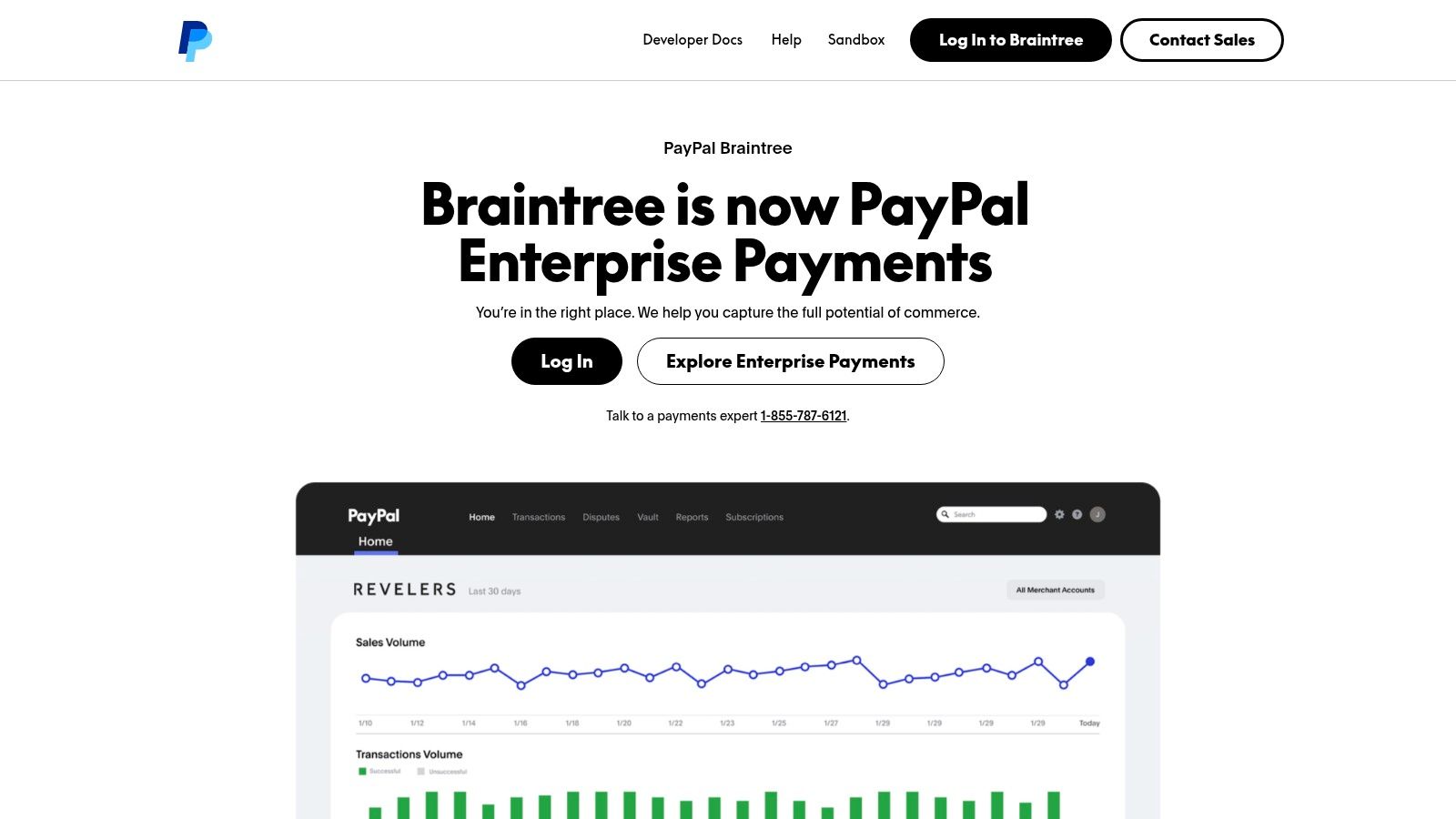
Braintree, a PayPal service, offers a powerful and flexible payment gateway designed for businesses that want deep control over their checkout experience. It uniquely combines traditional card processing with seamless access to popular digital wallets like PayPal and Venmo, all through a single integration. This makes it an excellent choice for merchants looking to provide a comprehensive suite of payment options while maintaining a high degree of technical customization.
Its modern Software Development Kits (SDKs) and robust server-side integrations appeal to businesses with development resources, allowing them to build a truly bespoke payment flow. By functioning as both a gateway and a processor, Braintree simplifies the payment stack, positioning itself as a strong candidate for the best payment gateway for small business, especially for those prioritizing both traditional and alternative payment methods.
Key Features and Pricing
Braintree provides a developer-centric platform with transparent pricing and essential tools for modern commerce. Established merchants may also qualify for custom or interchange-plus pricing models.
- Pricing: Standard pricing for cards and digital wallets is 2.59% + 49¢ per transaction. ACH Direct Debit transactions are priced at 0.75%, with a cap of $5 per transaction. There are no monthly fees for the standard plan.
- Payment Methods: It offers a single integration for all major credit and debit cards, PayPal, Venmo, Apple Pay, and Google Pay. It also supports ACH Direct Debit for recurring payments or large transactions.
- Payout Speed: Standard settlement is typically within 2-5 business days, depending on the payment method and the business's industry and history.
- Security: Braintree provides built-in risk management tools, 3D Secure 2.0 support, and optional chargeback protection features to help merchants fight fraud and minimize losses.
Pros and Cons
| Pros | Cons |
|---|---|
| No monthly fees on the standard plan | Requires underwriting and an approval process |
| Competitive standard rates for card processing | Features are geared more toward technically-proficient teams |
| Seamlessly integrates PayPal and Venmo alongside cards | Different fee structures for PayPal/Venmo can complicate cost analysis |
| Strong SDKs and APIs for custom web and mobile integrations | Less ideal for businesses seeking simple, no-code payment solutions |
Best for: Businesses with developer resources, mobile-first companies, and merchants who want to offer PayPal and Venmo alongside traditional card payments in a customized checkout.
Website: https://www.braintreepayments.com
6. Helcim
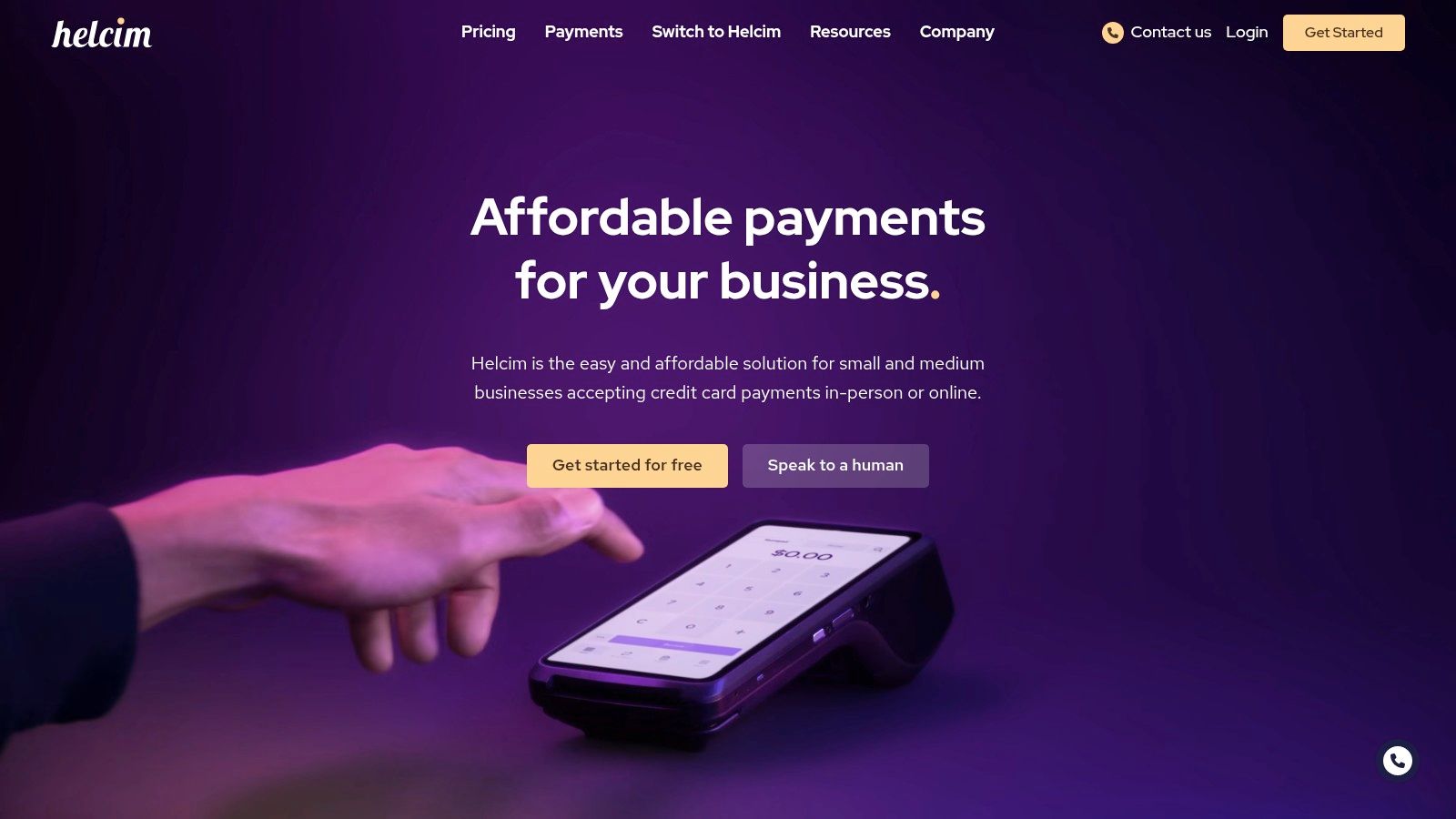
Helcim positions itself as a champion for small businesses by offering a transparent pricing model and an all-in-one payments platform without the hefty monthly fees. It departs from the common flat-rate structure, opting for an interchange-plus model that can lead to significant savings for businesses as their sales volume grows. This approach, combined with a suite of free, built-in tools, makes it a compelling candidate for the best payment gateway for small business.
The platform is designed to be a complete commerce solution, providing everything from online checkout and invoicing to a physical point-of-sale (POS) terminal and a virtual terminal. This unified ecosystem helps businesses manage all their payment activities in one place, simplifying operations and reducing the need for multiple software subscriptions.
Key Features and Pricing
Helcim's main draw is its interchange-plus pricing, which automatically lowers your rate as your processing volume increases. There are no monthly fees, no contracts, and no setup costs.
- Pricing: Utilizes an interchange-plus model. For online transactions, the margin starts at 0.40% + 8¢ for businesses processing up to $25k/month and decreases with volume. In-person transactions start at a 0.20% + 8¢ margin.
- Payment Methods: Accepts all major credit cards and offers low-cost ACH bank payments. A unique ‘Fee Saver’ feature allows businesses to pass on credit card fees to customers where it's legally permitted.
- Payout Speed: Standard deposits for card transactions typically arrive the next business day, providing reliable access to funds.
- Integrations: Offers a well-documented API for custom integrations and supports major platforms like WooCommerce, Magento, and QuickBooks, though its pre-built plugin library is less extensive than some larger competitors.
Pros and Cons
| Pros | Cons |
|---|---|
| Transparent pricing that can yield lower effective rates than flat-rate | Interchange-plus statements can be complex for newcomers |
| No monthly fees, contracts, or hidden charges | Hardware selection is slimmer than some POS-centric platforms |
| Robust built-in software (invoicing, POS) without extra fees | May not be the cheapest option for very low-volume micro-businesses |
| Automatic volume discounts as your business grows | Brand recognition is lower compared to giants like Stripe or PayPal |
Best for: Established small to medium-sized businesses with consistent sales volume looking to minimize processing costs through a transparent interchange-plus model.
Website: https://www.helcim.com
7. Authorize.net (a Visa solution)
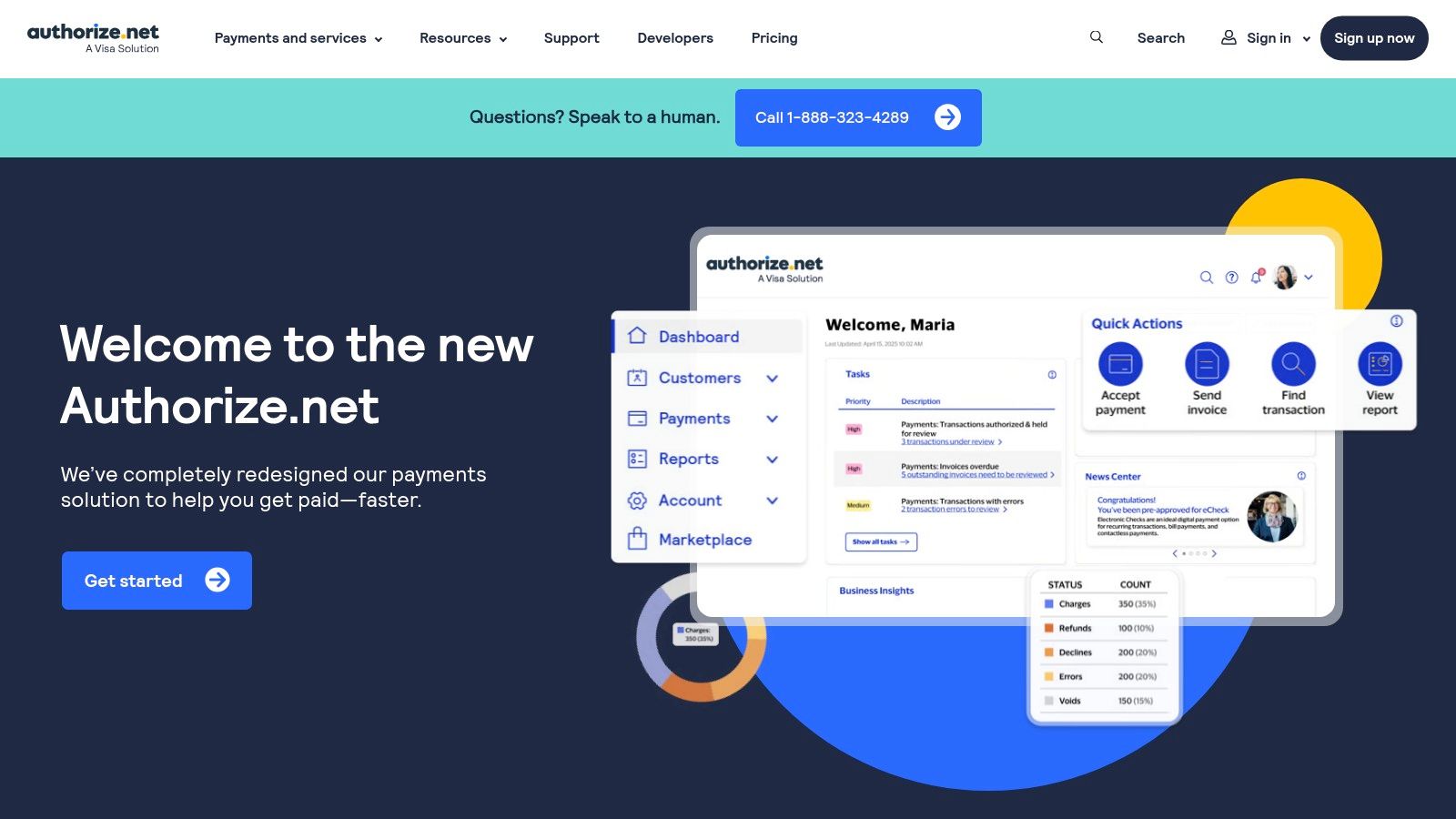
Authorize.net is one of the most established names in online payments, serving as a trusted gateway for merchants since 1996. Now a Visa solution, it offers a distinct advantage for businesses that already have a merchant account or want the flexibility to choose their own processor. It functions as a powerful, secure bridge between a small business's website and the payment processing networks, making it a reliable contender for the best payment gateway for small business.
Unlike all-in-one solutions, Authorize.net can operate purely as a gateway, giving you control over your processing relationships. It provides a comprehensive set of tools, including a virtual terminal for manual orders, recurring billing management, and simple invoicing, catering to a wide range of business models beyond standard e-commerce.
Key Features and Pricing
Authorize.net offers two primary plans: an all-in-one option that includes a merchant account and a gateway-only plan for those bringing their own processor. This flexibility is key to its appeal.
- Pricing: The Gateway Only plan has a $25 per month fee, plus a 10¢ per-transaction fee (your processor's rates apply separately). The All-in-One option is $25 per month with a transaction rate of 2.9% + 30¢.
- Payment Methods: It supports all major credit cards, debit cards, and digital wallets like Apple Pay and PayPal. It also offers an eCheck (ACH) processing add-on for bank transfers.
- Fraud Prevention: A key feature is the included Advanced Fraud Detection Suite (AFDS), which offers 13 configurable filters to help merchants identify and prevent suspicious transactions.
- Integrations: With a long history, Authorize.net has pre-built integrations with hundreds of shopping carts and business platforms, including Shopify, WooCommerce, Magento, and BigCommerce. If you're looking to understand how this model works, you can find out more about the role of merchant accounts in ecommerce.
Pros and Cons
| Pros | Cons |
|---|---|
| Flexible gateway-only option if you have a preferred merchant account | A monthly gateway fee is required on all plans |
| Widely trusted and accepted with a strong security reputation | The interface can feel more dated compared to newer platforms |
| Advanced Fraud Detection Suite included at no extra cost | Total cost can be higher once processor fees are added |
| Extensive integrations with e-commerce platforms and shopping carts | Setup can be more technical for those without experience |
Best for: Businesses that already have a merchant account, retailers who need a reliable virtual terminal for phone orders, and established companies looking for robust fraud prevention tools.
Website: https://www.authorize.net
Top 7 Small-Business Payment Gateways — Feature Comparison
| Name | Integration / Complexity 🔄 | Resources & Cost ⚡ | Expected Outcomes 📊⭐ | Ideal Use Cases 💡 | Key Advantages ⭐ |
|---|---|---|---|---|---|
| BlockBee | Developer-first API + official plugins; moderate setup for self-custody 🔄 | Low transaction fees (from 0.25%); no fixed costs; dev resources for custom flows ⚡ | Fast crypto acceptance & instant/self-custodial payouts; measurable traction (3K+ merchants) 📊⭐ | E‑commerce, fintechs, SaaS, enterprises needing mass self-custodial payouts 💡 | Non‑custodial architecture, 70+ coins, reusable addresses, strong developer tools ⭐ |
| Stripe | Robust APIs and hosted options; moderate-to-advanced integration 🔄 | No setup fee; card fees standard; extra cost for cross‑border FX & add-ons ⚡ | Scalable, reliable payments with advanced fraud tools; strong developer ecosystem 📊⭐ | Online merchants, subscription businesses, startups scaling to enterprise 💡 | Broad payment-method support, excellent docs, integrated hosted checkout ⭐ |
| Square | Very quick POS setup; simple online tools; minimal technical lift 🔄 | Flat, predictable processing rates; optional hardware costs ⚡ | Fast in‑store deployment and predictable cash flow; good omnichannel support 📊⭐ | Retail, restaurants, service businesses, hybrid in‑person/online sellers 💡 | Strong POS hardware/ecosystem, fast onboarding, clear pricing ⭐ |
| PayPal for Business | Easy drop‑in checkout; moderate complexity for custom stacks 🔄 | No setup fees; fees can be higher than interchange‑plus for cards ⚡ | Improved mobile/social conversions via PayPal/Venmo recognition; wide consumer trust 📊⭐ | Small shops, social/mobile sellers, merchants seeking brand trust 💡 | Ubiquitous wallet acceptance (PayPal/Venmo), familiar consumer brand ⭐ |
| Braintree | Developer-centric SDKs and server integrations; technical integration 🔄 | Competitive card rates; underwriting required; possible custom pricing ⚡ | Flexible gateway with wallet support; good for controlled, custom flows 📊⭐ | Tech teams needing gateway control plus PayPal/Venmo/card coverage 💡 | Single integration for cards + wallets, modern SDKs/APIs ⭐ |
| Helcim | Business-friendly integrations; moderate setup with built-in tools 🔄 | Interchange‑plus transparent pricing, no monthly fee; lower effective rates at volume ⚡ | Lower processing cost potential and robust SMB tooling (invoicing, ACH) 📊⭐ | Small/mid SMBs focused on cost transparency and ACH support 💡 | Transparent interchange‑plus pricing, solid built-in software ⭐ |
| Authorize.net | Gateway-focused; integrates with existing merchant accounts; more technical setup 🔄 | Monthly gateway fee plus whatever processor charges; eCheck add‑on ⚡ | Stable gateway option with mature fraud detection; keeps processor flexibility 📊⭐ | Merchants keeping current processor or needing gateway-only setup 💡 | Wide acquirer compatibility, AFDS fraud suite, mature ecosystem ⭐ |
Making the Right Choice for Your Business's Bottom Line
Navigating the crowded field of payment gateways can feel overwhelming, but making an informed decision is one of the most impactful choices you can make for your small business. Throughout this guide, we've explored a range of powerful options, each with unique strengths tailored to different business models. From all-in-one powerhouses to specialized crypto solutions, the key is to align your choice with your specific operational needs and growth ambitions.
Key Takeaways and Final Considerations
As you weigh your options, remember that the "best" payment gateway is not a one-size-fits-all solution. For many small businesses, a provider like Stripe or Square offers a fantastic starting point with robust features, predictable flat-rate pricing, and extensive integrations that simplify day-to-day operations. If your priority is squeezing every penny out of your margins, the interchange-plus model offered by Helcim presents a transparent, cost-effective alternative for businesses with consistent sales volume.
On the other hand, if you're looking to future-proof your business and cater to a global, tech-savvy audience, embracing cryptocurrency is a strategic move. A non-custodial gateway like BlockBee stands out by giving you complete control over your funds, eliminating chargebacks, and significantly reducing transaction fees. This approach isn't just about accepting a new form of payment; it's about adopting a more secure, efficient, and decentralized financial infrastructure.
Your Actionable Decision-Making Checklist
Before you commit, run through this final checklist to ensure you've covered all your bases:
- Assess Your Customer Base: Where are your customers located? Do they prefer traditional credit cards, digital wallets, or are they open to alternative payments like crypto?
- Analyze Your Sales Volume: Are your sales high enough to benefit from an interchange-plus model, or is a predictable flat-rate structure safer for your budget?
- Evaluate Technical Requirements: Do you need a simple, no-code setup via a WooCommerce or Magento plugin, or do you have a development team ready to leverage a powerful API?
- Consider Your Growth Trajectory: Will your chosen gateway support international expansion, subscription models, or new payment methods as your business evolves?
Choosing the right payment gateway is a crucial piece of your operational puzzle. However, processing payments efficiently is just one part of the equation. To truly succeed, small businesses must also consider how payment processing integrates with their broader strategies, including comprehensive e-commerce marketing automation. A seamless connection between payments and marketing can unlock powerful insights and drive customer retention.
Ultimately, selecting the best payment gateway for your small business means finding a partner that not only facilitates transactions but also supports your long-term vision.
Ready to embrace the future of payments with unparalleled security and rock-bottom fees? Explore BlockBee to see how our non-custodial cryptocurrency payment gateway can empower your small business with full financial control and global reach. Get started today at BlockBee and step into a new era of e-commerce.
Review Us