
What is a Cold Storage Wallet: A Practical Guide to Crypto Security
Think of a cold storage wallet as the digital equivalent of a fortified bank vault for your crypto assets. Its single most important feature is that it's completely disconnected from the internet. This is a stark contrast to a 'hot' wallet, which is always online to make quick transactions easier. By keeping your private keys—the secret code that proves ownership of your crypto—offline, a cold wallet creates an "air gap" that shields your funds from online threats like hackers and malware.
Why This "Digital Vault" Idea is a Game-Changer
Let's use a real-world parallel. You wouldn't store your company's life savings in the cash register at the front of the store, right? You'd keep the bulk of it in a secure vault. A hot wallet is your cash register—great for daily transactions but vulnerable. A cold wallet is that vault.
The concept is simple: physically isolate your private keys from any network. If you've ever thought about the differences between cloud storage vs local storage, you're already halfway there. A hot wallet is like a file on a cloud server—convenient and accessible, but also exposed. A cold wallet is like a file stored on a hard drive that you keep locked in a safe. It's not as quick to access, but it's infinitely more secure.
For any business handling crypto, this isn't just a nerdy detail; it's a fundamental part of managing risk. Leaving a significant balance in an online wallet is practically asking for trouble.
Why Keeping Keys Offline is Your Best Defense
The entire purpose of a cold wallet is to safeguard your private key. This one piece of data gives complete control over your cryptocurrency. If a thief gets it, your funds are gone for good, and there's no bank to call for a refund.
Here’s exactly why that offline "air gap" is so critical:
- It Stops Hackers Cold: Cybercriminals simply can't reach a device that has no internet connection. It's a physical impossibility.
- It's Immune to Malware: Viruses, spyware, and keyloggers that infect your computer or phone can't jump across the air gap to steal keys from your offline wallet.
- It Defeats Phishing Scams: You can't be tricked into entering your private key on a fake website if the key is stored on a device that never connects to those sites in the first place.
By keeping private keys entirely offline, a cold wallet functions like a digital fortress. It only connects to the internet for the brief, controlled moment it takes to sign and authorize a transaction before going dark again.
This security-first approach is why the market is booming. With exchange hacks and online theft becoming all too common, the global cold wallet market hit $3.5 billion in 2024. Experts predict it will soar to $12.2 billion by 2033, which tells you everything you need to know about its importance in the world of digital finance.
Exploring the Main Types of Cold Storage Wallets
Think of "cold storage" less as a single product and more as a security strategy. There isn't just one way to do it. Just like a business might use a petty cash box for small daily expenses and a steel bank vault for its main reserves, different cold storage wallets are built for different jobs. Getting a handle on these options is the first step to building a solid security plan for your digital assets.
The most common and user-friendly starting point is the hardware wallet. Imagine a small, specialized USB drive designed to do just one thing: keep your private keys securely offline. These little devices are completely isolated from your internet-connected computer. To approve any transaction, you have to physically confirm it, usually by pressing a button right on the device. This simple physical step makes it impossible for malware on your computer to sneakily drain your funds.
Hardware wallets have become incredibly popular because they hit the sweet spot between top-tier security and everyday convenience, making them a fantastic choice for both individuals and businesses. If you want to get into the nitty-gritty of how they function, you can check out our guide on hardware wallets for a closer look.
Hardware Wallets: The Gold Standard for Most Users
So, how does it actually work? A hardware wallet signs transactions using a secure chip built right into the device. This means your private key never leaves the wallet, even when it's plugged into your computer to send a transaction out to the world. The transaction details get sent to the wallet, it signs them offline, and then it sends the signed transaction back to the computer to be broadcast to the network. Your keys stay safe and sound.
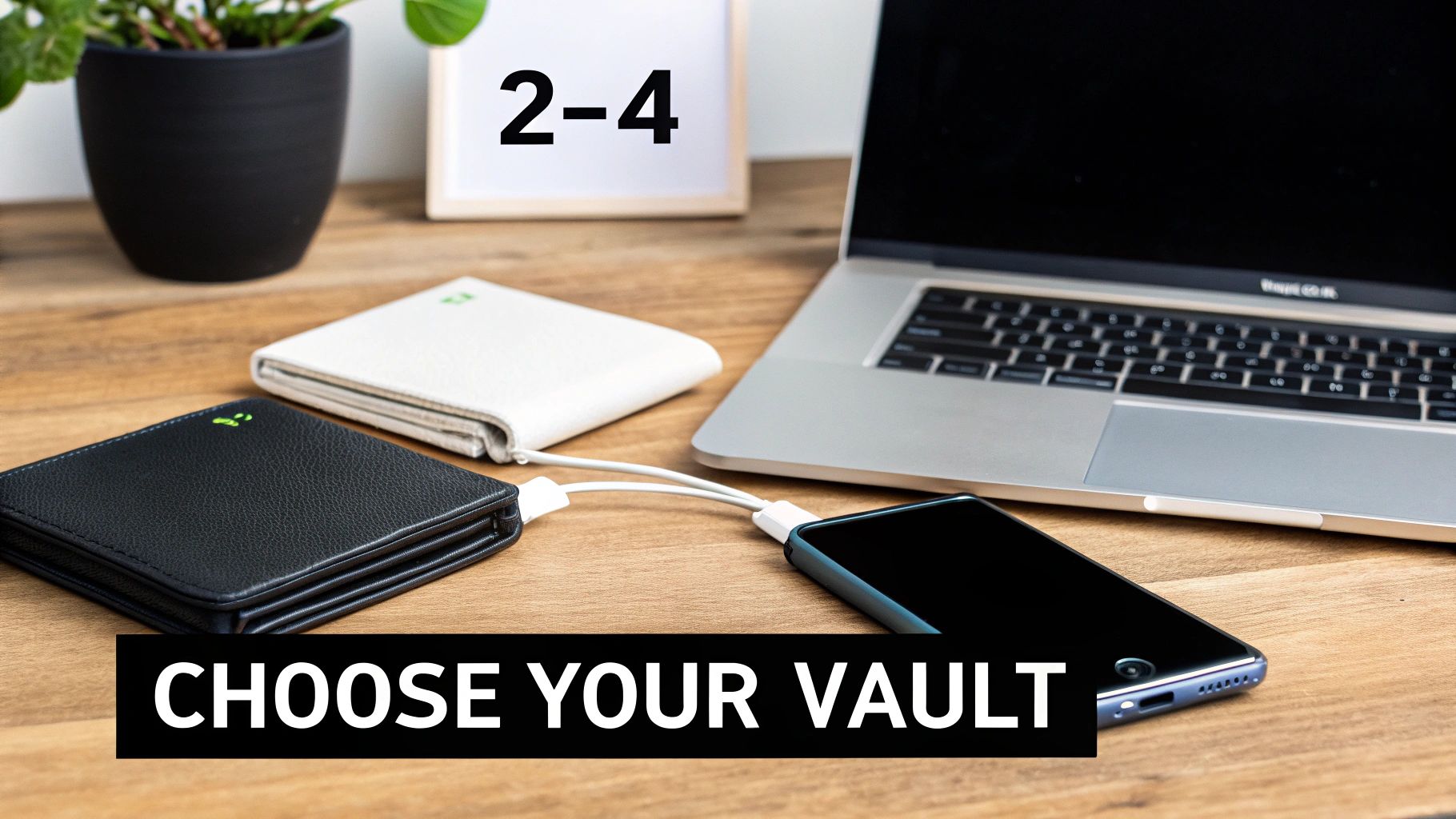
This setup, often highlighted by leading manufacturers like Ledger, positions these devices as the ultimate shield for your crypto. They blend physical security with clever software to protect your assets from a huge range of online threats.
Paper Wallets: A Low-Tech but Viable Option
Before hardware wallets were everywhere, paper wallets were a popular method for going cold. At its core, a paper wallet is just what it sounds like: a physical piece of paper with your public and private keys printed on it, often as QR codes you can easily scan. Since it's just paper, it’s completely offline and totally immune to hackers.
But that simplicity is also its biggest drawback. Paper is fragile. It's vulnerable to fire, water damage, or just fading over time. They’re also not very practical for frequent use. To spend the funds, you have to "sweep" the private key into an online hot wallet, which exposes it. After that, you need to create a whole new paper wallet for any leftover funds. They really only make sense for very long-term holding where you don't plan on touching the funds for years.
Advanced Solutions for Maximum Security
When you're talking about businesses or institutions managing a serious amount of assets, you need to bring out the big guns. These advanced cold storage solutions trade some convenience for multiple layers of hardened security, designed for high-stakes environments.
Air-Gapped Computers: This setup involves a computer that has never, and will never, connect to the internet. You create a transaction on a normal online computer, move it to the air-gapped machine (usually via a USB stick or QR code) to be signed, and then transfer the signed transaction back to the online machine to broadcast it.
Multi-Signature (Multisig) Vaults: A multisig wallet is like having a bank vault that requires multiple keys to open. For example, a "2-of-3" setup means that out of three authorized keyholders, at least two must approve any transaction. This eliminates a single point of failure. A thief would have to compromise multiple keys, often held by different people in separate locations, making a successful attack incredibly difficult.
The common thread with these advanced methods is the principle of "air-gapping." The wallet never directly touches the internet. This physical gap dramatically slashes the risk of being hacked compared to keeping funds on an online exchange.
The market reflects this shift toward tighter security. In 2024, the crypto cold storage wallet market was valued at $1,634.5 million, with strong growth expected. This tells us that businesses, especially those handling millions in transactions, are wisely moving to cold storage to keep control of their funds and sidestep the kind of catastrophic losses we’ve seen with recent exchange collapses.
The Unbeatable Security of Cold Storage
Let's get straight to the point: the single biggest reason businesses and serious investors swear by cold storage is its incredible security. By keeping your private keys completely disconnected from the internet, you create what’s called an “air gap”—a digital moat that online attackers simply can't cross. This is the cornerstone of protecting digital assets from the most common and damaging threats out there.
Think of a bank vault. Its strength isn't just the thick steel doors; it's the fact that it's a physically separate, isolated space. A cold wallet works on the exact same principle. It’s not about having a slightly better password; it’s about making your crypto physically unreachable to anyone who isn't right there with you.
This simple offline approach instantly neutralizes entire categories of cyberattacks that plague hot wallets and exchanges. Things like server hacks, malware on your computer, or a convincing phishing email become almost completely ineffective. A hacker can't steal what they can't connect to.
Building a Digital Fortress Against Online Threats
When your funds sit on an exchange or in a software wallet, they're perpetually exposed to the internet's dangers. One slip-up—a compromised password or a bug in an exchange's code—could mean a total loss. We’ve all read the horror stories of high-profile exchange hacks where thousands of users lost everything overnight.
A cold wallet, in stark contrast, completely removes this attack surface. Let's break down the specific threats it shuts down:
- Malware and Viruses: If your computer gets infected with keylogging spyware, it can't do a thing. Your hardware wallet signs transactions internally, so the private keys are never exposed to the infected machine.
- Phishing Attacks: Scammers are great at creating fake websites to trick you into entering login details. But with a cold wallet, you have to physically press a button on the device itself to approve any transaction. This provides a crucial, real-world verification step that a phishing site can’t fake.
- Server Breaches: Centralized exchanges are massive, glowing targets for hackers. If their servers get compromised, any funds stored there are at risk. With a cold wallet, you're your own bank. An exchange hack has zero effect on your holdings.
Putting cold storage in place is a fundamental part of establishing robust data security measures for your digital assets. It shifts your security posture from being reactive to proactive, putting a physical wall between your wealth and online criminals.
Taking True Ownership of Your Assets
Beyond just stopping theft, a cold wallet gives you absolute sovereignty over your funds. This gets to the heart of a core crypto philosophy: "not your keys, not your crypto." When you leave assets on an exchange, you're trusting them to hold your money for you. Ultimately, they have the final say.
This introduces risks you might not have thought about. An exchange could freeze your account for any reason, face a regulatory shutdown, or even go bankrupt—locking you out of your own funds. A cold wallet makes this impossible. You, and only you, hold the keys.
At its core, a cold storage wallet is your fortress for cryptocurrencies: offline storage of private keys on devices unlinked to the internet, preventing remote attacks that vaporized $3.7 billion in 2022 alone from hot wallet exploits.
The market’s rapid growth shows just how urgent this need for self-custody has become. In 2025, the cold storage crypto wallet market was already valued at $612 million and is on track for major expansion as more businesses wake up to its importance. You can read more about these market trends on datainsightsmarket.com.
For online merchants, this concept is a game-changer. When you use a non-custodial payment gateway like BlockBee, you can direct incoming payments straight to a cold wallet you control, giving you instant, secure ownership.
This level of control empowers businesses to build real financial independence. You're no longer at the mercy of another company's security team, server uptime, or financial health. Your assets are your assets. Period. That autonomy isn't just a nice feature; it's the whole point of cryptocurrency and the ultimate benefit a cold wallet delivers.
How to Integrate Cold Storage Into Your Business Operations
Alright, let's move from theory to practice. Bringing a cold storage wallet into your business isn't as simple as just buying a device and plugging it in. It’s about building a smart, secure workflow that lets you handle daily operations without putting your company’s core assets at risk. The real goal is to create a system where you can accept customer payments smoothly while keeping the vast majority of your crypto locked down and offline.
For most businesses, the most sensible approach is a hybrid model. This strategy combines a non-custodial hot wallet for everyday transactions with a highly secure cold wallet for long-term savings.
Think of it like a retail store. You keep a small amount of cash in the register for daily sales and making change, but at the end of the day, the bulk of the money goes into a locked safe in the back. It’s a simple concept, but that separation is what drastically cuts down your exposure to online threats.
The Hybrid Hot-and-Cold Wallet Workflow
The magic of this workflow lies in automating your security, which reduces the chance of human error. This is where a non-custodial payment gateway like BlockBee becomes a crucial part of the puzzle. Since BlockBee never actually holds your funds, you have total control from the moment a customer pays you, letting you route crypto directly to your own secure wallets.
Here’s a simple breakdown of how it works in practice:
- Customer Payment: A customer buys something from your website. The BlockBee gateway handles the transaction, placing the funds into a temporary address just for that purchase.
- Automated Sweeping: Next, you set up rules to automatically “sweep” funds. For example, you could create a rule that any balance over $1,000 is automatically moved out of the operational wallet.
- Transfer to Cold Storage: Those swept funds are then sent straight to your main business cold storage address. This transfer is the only time your cold wallet interacts with the network, and even then, its private keys never, ever go online.
This process creates a one-way street for your funds, moving them from a place of potential online exposure to a secure, offline vault.

The diagram above perfectly illustrates this principle. Your cold storage wallet acts as an impenetrable final destination, shielding your assets from the chaos of the internet.
This table breaks down the entire secure payment process for a business, from the initial customer transaction to the final, secure storage of funds.
Secure Workflow for Business Crypto Payments
| Step | Action | Tool/Platform | Security Benefit |
|---|---|---|---|
| 1 | Customer initiates a crypto payment for goods/services. | Your E-commerce Site | Standard transaction start. |
| 2 | A non-custodial gateway generates a unique payment address. | BlockBee | Segregates customer funds from business operational funds. |
| 3 | Funds are automatically "swept" based on preset rules (e.g., time or amount). | BlockBee Automation | Minimizes funds held in the internet-connected receiving address. |
| 4 | Swept funds are transferred directly to the business's main cold storage address. | Your Cold Wallet | Moves the bulk of assets completely offline, away from hackers. |
| 5 | A small, operational balance is kept in a hot wallet for liquidity. | Business Hot Wallet | Allows for refunds or minor operational expenses without touching main reserves. |
By following these steps, you build a robust system that gives you the speed of a hot wallet for payments and the Fort Knox-level security of cold storage for your savings.
Managing Payouts and High-Volume Transactions
This system isn't just about collecting money—it's equally important for managing outgoing payments securely. Whether you’re paying suppliers, settling payroll, or sending affiliate commissions, you absolutely do not want to initiate every small transaction from your main cold wallet. That would be a logistical nightmare and would needlessly expose your primary keys.
Instead, you just reverse the workflow:
- Top-Up the Hot Wallet: When it’s time to pay out, you authorize a single, larger transfer from your cold storage to your operational hot wallet. This should always be a deliberate, manually approved action that goes through several security checks.
- Execute Mass Payouts: With the hot wallet funded, you can then use a feature like BlockBee’s Mass Payouts tool to send payments to multiple recipients at once. This keeps the process efficient and ensures your main crypto vault remains untouched.
This structured approach means your cold wallet is only accessed for infrequent, high-value, and heavily scrutinized transfers. It creates a powerful operational framework that is both safe and scalable—perfect for any business that’s serious about protecting its crypto.
For a deeper dive into building out this type of secure framework, check out our complete guide on creating a crypto custody solution for your business. It's the key to managing growth without ever having to compromise on security.
Best Practices for Managing Your Cold Storage Wallet
When you use a cold storage wallet, you're taking direct control of your own financial security. It's a powerful move that insulates you from online hacks, but it also means the buck stops with you. The responsibility for protecting your assets is now entirely on your shoulders.
With online threats out of the picture, human error and physical risks—like theft or a simple house fire—become your biggest concerns. This is where discipline comes in. Following a strict set of best practices isn't just a good idea; it's essential for keeping your funds safe for the long haul.
The cornerstone of your entire security setup is the recovery seed phrase. That string of 12 or 24 words isn't just a simple backup; it's the master key to your digital vault. If your hardware wallet gets lost, stolen, or smashed, this phrase lets you restore everything on a new device. But if someone else gets their hands on it, they can drain your accounts in minutes.
Simply put, protecting your seed phrase is the most critical job you have.
Protecting Your Recovery Seed Phrase
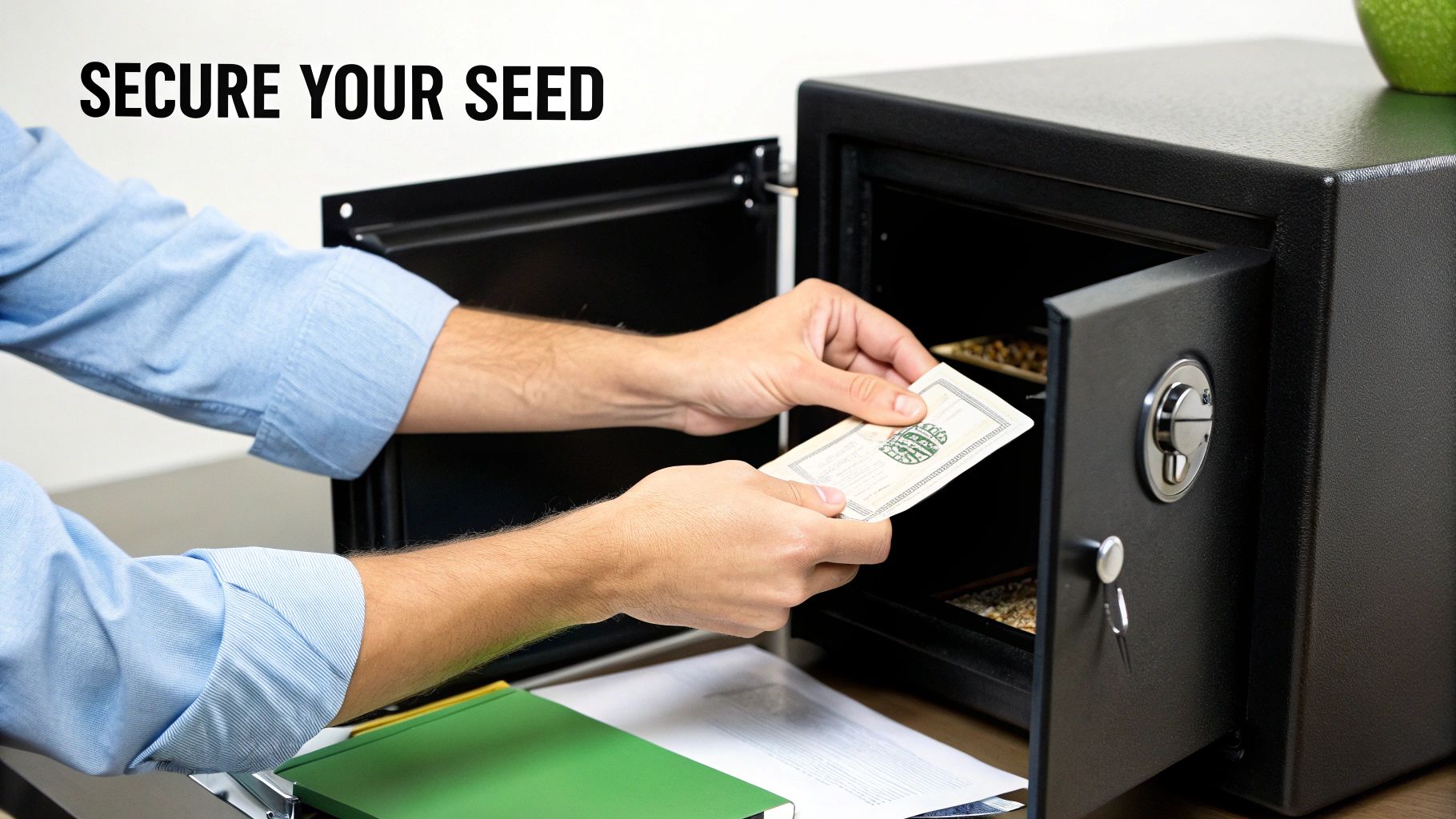
There's one golden rule here: never, ever store your seed phrase digitally. Don't snap a photo of it with your phone, save it in a notes app, or tuck it away in a password manager. Any device with an internet connection is a potential point of failure. A single piece of malware or a compromised cloud account is all it takes for a hacker to find your master key and wipe you out.
Your recovery phrase needs to be stored physically, and ideally, in more than one place. Writing it down on the little paper card that comes with your wallet is a starting point, but let's be honest, paper is flimsy.
Think of your seed phrase as the deed to your digital property. Storing it as a file on your computer is like leaving the original deed to your house on the front lawn. It must be protected from both digital thieves and physical disasters.
For real peace of mind, you need to step up your game:
- Metal Plate Backups: Get your seed phrase stamped or etched onto a steel or titanium plate. These are built to survive fires and floods—disasters that would turn a piece of paper to ash or pulp.
- Geographic Distribution: Don't put all your eggs in one basket. Keep copies in two or three completely separate, secure locations. A fireproof safe at home and a safe deposit box at a bank is a classic combination. This way, if one location is compromised, you still have a backup.
- Split Backups (Advanced): For those managing significant value, you can split the phrase itself. For instance, with a 24-word phrase, you could store words 1-12 in one location and 13-24 in another. This adds another layer of security, as a thief would need to compromise multiple locations to get the full key.
To truly master this, our guide on seed phrase security walks through the best practices and common mistakes people make.
Establishing Clear Operational Procedures
If you're a business or a team managing crypto assets, clear, documented rules are non-negotiable. Having one person hold all the keys creates a single point of failure that can be catastrophic, whether through an honest mistake or a malicious act.
Instead, you need a formal protocol—a Standard Operating Procedure (SOP)—that spells out exactly how every wallet operation should be handled.
Key components of a business SOP should include:
- Defined Roles: Make it crystal clear who is authorized to handle the wallet, who can propose a transaction, and who must give the final sign-off. A multi-signature wallet is the perfect tool to enforce these roles programmatically.
- Transaction Protocol: Lay out the exact steps for creating, verifying, and signing a transaction. This should include things like dual verification, where a second person must independently confirm the recipient's address and the amount before anything is sent.
- Regular Audits: Schedule routine audits to check that the on-chain balance matches your internal records. This simple check-up helps you spot unauthorized activity fast and ensures everyone is sticking to the rules.
By creating a structured and transparent system, you move beyond relying on just one person's integrity. You build a resilient framework that dramatically cuts down the risk of human error and protects your company's digital assets. This discipline is the final, crucial layer of any serious cold storage strategy.
Common Questions About Cold Storage Wallets
Diving into the world of crypto security always stirs up questions, especially for businesses moving their assets offline for the first time. The basic idea is simple enough—keep your keys disconnected from the internet—but how that works in practice can feel a bit murky.
Let's clear the air and tackle some of the most frequent questions people have. Answering these is key to building the confidence you need to manage your digital assets the right way.
Can a Cold Storage Wallet Be Hacked?
This is the million-dollar question. The short answer is no, not in the way you're probably thinking. A cold storage wallet can't be remotely hacked over the internet. Its defining feature is that "air gap," a physical separation from any online network. This makes it completely immune to the malware, phishing scams, and server breaches that constantly threaten hot wallets.
But that doesn't mean your funds are invincible. It just means the security focus shifts from the digital world to the physical one.
The real threats to a cold wallet are much more tangible:
- Physical Theft: Someone could just steal the device itself.
- Coercion: An attacker could try to force you to hand over your PIN and the device.
- Seed Phrase Compromise: This is the big one. If someone finds your written-down recovery phrase, they can clone your wallet and drain every last cent without ever needing your hardware device.
So, while your wallet is safe from online hackers, you have to guard it against physical threats with equal vigilance.
How Often Should I Move Funds to Cold Storage?
There's no one-size-fits-all answer here; it really comes down to your business's cash flow and what level of risk you're comfortable with. You're looking for that sweet spot between maximum security and operational readiness.
A good way to think about it is to treat your cold wallet like a company savings account and your hot wallet like petty cash. You wouldn't leave a year's worth of operating capital in the cash register overnight, right? The same logic applies here.
The best practice is to set a clear policy. For example, you might decide that any time your hot wallet's balance creeps above $5,000, the excess gets moved to cold storage. This could be a daily, weekly, or even monthly routine, depending on your transaction volume. For businesses dealing with frequent payments, automating this sweep using a tool like BlockBee can ensure funds are moved to safety consistently, without you having to think about it.
What Happens If I Lose My Hardware Wallet?
This is a huge source of anxiety for newcomers, but here's the good news: losing the physical device is not a disaster, provided you've properly secured your recovery seed phrase.
Think of the hardware wallet as just a fancy key. Your funds aren't actually stored on the device; they live on the blockchain. The wallet simply holds the private key that gives you the power to access and move them.
If your device is lost, stolen, or even run over by a truck, the recovery process is straightforward:
- Get a new hardware wallet (it can even be from a different brand, as long as it's compatible).
- When setting it up, select the option to "restore from recovery phrase."
- Carefully input your 12 or 24-word seed phrase.
Voilà! The new device now has full access to all your funds, just as they were. This is why we say that protecting your seed phrase is infinitely more critical than protecting the device itself. The device is replaceable; that seed phrase is your entire financial lifeline.
Ready to build a secure, non-custodial payment system that works hand-in-hand with your cold storage strategy? With BlockBee, you can accept over 70 different cryptocurrencies with lightning-fast confirmations and have payments sent directly to a wallet you control. Take charge of your assets and simplify your operations—visit BlockBee's official website to learn more.
Review Us